Save this article to read it later.
Find this story in your accountsSaved for Latersection.
About halfway into the first episode ofMrs.

Her husband, Fred (John Slattery), paws at her.
Shes tired; hes subtly insistent.
He ignores her physical and verbal signals that make it clear shes not interested in sex.
When he undresses her, the music intervenes to remind us of the gravity of this moment.
It tracks every subtle shift in her disposition, revealing the well of emotion beneath the lacquered image.
Wouldnt she realize the strictures in her life?
Over nine episodes,Mrs.
These women get single episodes focusing on a chapter in their lives.
In aninterview with Slate, Waller elaborated on her vision for Phyllis in the face of criticism.
I think Ive created a human character, but not a sympathetic character, she said.
You have to understand why someone like Phyllis Schlafly appealed to so many women.
And if shes a mustache twirling villain, youre not going to understand that.
I didnt want to have my head buried in the sand.
Phylliss politics are also shaped by a very specific and dangerous kind of white womanhood, butMrs.
Americais too timid a show to center that reading.
This makes the moments when she fractures revealing a nervousness and yearning underneath this surface all the more effective.
Take the final close-up of episode six.
The filmmaking works in tandem with Blanchetts performance.
Phylliss eyes cast over the room as she laughs at some unheard joke.
Theres a twinge of sadness to her visage, an undercurrent of regret and anger and yearning.
The kind any woman who has been in a room of men undermining her has felt before.
Its a cunning performance, ripping through Phylliss facade to reveal just how piercingly human she is.
Blanchett is a lucid performer able to render minute gestures with great meaning.
One need only look at the early work of Bette Davis to understand this is possible.
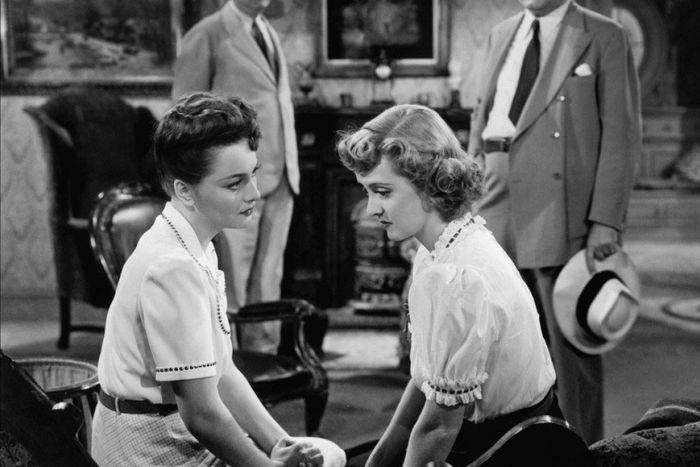
In the summer of 1942, John Hustons second feature film,In This Our Life,was released.
The close-ups of Davis are never full-on.
Instead, her eyes are always focused away from the camera.
Shes rooted in the corner of the frame.
In this brief scene, Davis is willing to do something Blanchett isnt in the entirety ofMrs.
America: let the audience hate her.
In his tremendous book-length essay of film criticism,The Devil Finds Work,James Baldwin praises Daviss performance.
In an interview with the Daily Beast,Waller discussed theMrs.
So we always wanted to portray those accusations.
But its instructive to look at the ways in which the show depicts Phylliss relationship to race.
Phyllis and Alice Macray look uncomfortable with her statements.
In doing so, the show draws a line between Phyllis and white women like Mary.
(Is it any surprise shes from the South?
Mrs. Americaends on a curious image that reinforces its worst instincts.
Phyllis isnt able to secure the power she has been clawing toward throughout the series.
Through homage, shot composition, and performance, the final moments ofMrs.
Americasuggest that Phyllis is trapped in a domestic hell of her own making.
Maybe at another time, in a different world, I wouldnt be so riled by the failures ofMrs.
Whiteness works by masking itself, and instead of ripping off the mask with Phyllis,Mrs.
